

TL;DR: ADHD treatment is not a straight line between “take medication” and “don’t take medication.” There are multiple evidence-based routes, and the right combination is personal. This guide walks through every real option available to adults in the UK, including how to navigate a system that often makes getting help harder than it should be.

You Got a Diagnosis. Now What?
You sat through the assessment. You answered questions that made you feel like you were confessing to a crime. Someone finally said the words. And then they handed you a leaflet and pointed you at a waiting list.
That moment, where the diagnosis lands and the actual help doesn’t follow, is where most people get stuck. You know what you’re dealing with. You just don’t know what to do about it. And every article you find either reads like a medical textbook or tells you to drink more water and go for a walk.
This is not that article.
What follows is a practical breakdown of every legitimate ADHD treatment route available to adults, including what the NHS offers, what private options exist, what works without medication, and how to build something that actually fits your life.
First: What Causes ADHD (And Why It Matters for Treatment)
Before you can pick a treatment approach, it helps to understand what you’re actually treating.
ADHD is a neurodevelopmental condition rooted in how the brain regulates dopamine and norepinephrine. These are the chemicals responsible for executive function: attention, impulse control, motivation, and working memory. The ADHD brain doesn’t have a shortage of these chemicals exactly. It has a regulation problem. The pathways that manage them work differently.
This matters because it explains why willpower-based approaches fail. Trying harder to focus when your dopamine regulation is structurally different is like trying harder to see when you need glasses. The problem isn’t effort. The problem is hardware.
That said, hardware can be supported in more than one way. Medication is one. It isn’t the only one.
The Treatment Map: What Actually Exists
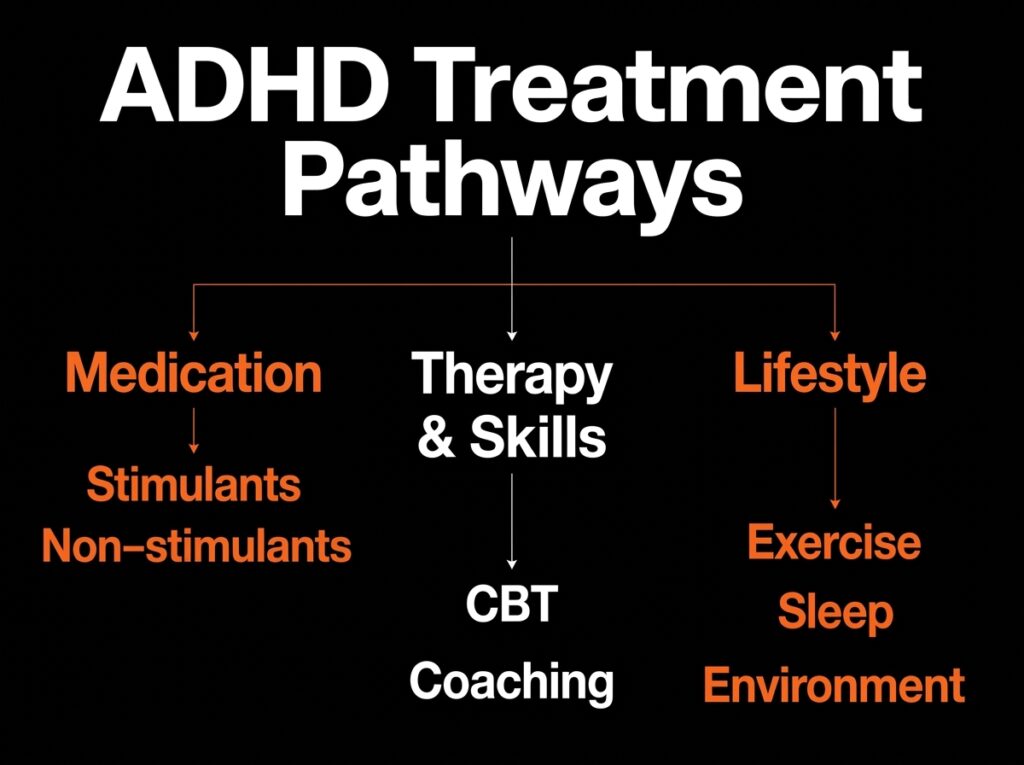
Most people searching “ADHD treatment” have been told about one or maybe two options. Here is the full picture.
Medication
ADHD medications for adults fall into two main categories.
Stimulants are the first line of treatment for most adults. In the UK, these are typically methylphenidate (Ritalin, Concerta, Equasym) or lisdexamfetamine (Vyvanse, Elvanse). They work by increasing dopamine availability in the brain. For many people, the effect is significant and fast. For others, the side effects, appetite suppression, elevated heart rate, anxiety, difficulty sleeping, are reasons to try alternatives or adjust the dose.
Non-stimulants are the other option if stimulants don’t suit you. Atomoxetine (Strattera) is the most commonly prescribed. It works differently, building up over weeks rather than hours, and doesn’t carry the same misuse risk. It suits some people better, particularly those with anxiety that stimulants worsen.
| Medication Type | Examples (UK) | How Quickly It Works | Common Side Effects |
| Stimulant (methylphenidate) | Ritalin, Concerta | Within 30-60 minutes | Appetite loss, sleep issues, elevated heart rate |
| Stimulant (lisdexamfetamine) | Elvanse, Vyvanse | Within 1-2 hours | Similar to above, often milder |
| Non-stimulant | Strattera (atomoxetine) | 2-6 weeks | Nausea, fatigue, mood changes initially |
ADHD medication in the UK for adults is only prescribable by a specialist. Your GP can refer you, but they cannot start you on these medications themselves. This is where the system gets frustrating.
Therapy and Skills-Based Approaches
Medication adjusts the chemistry. Therapy builds the scaffolding.
Cognitive Behavioural Therapy adapted for ADHD is the most evidence-backed psychological treatment. ADHD-focused CBT doesn’t just address mood. It specifically targets executive function gaps: planning, procrastination, emotional regulation, self-esteem. It works best alongside medication but has genuine independent value.
Coaching is separate from therapy and often more practical. An ADHD coach works with you on real-world systems, time management, task breakdown, building routines that match how your brain actually functions rather than how productivity culture says it should.
Lifestyle-Based Support
If you’re wondering how to manage ADHD without medication as an adult, this section is not a consolation prize. These are real interventions with real evidence.
Exercise is the most effective non-pharmaceutical dopamine lever available. Cardiovascular exercise specifically has been shown to improve executive function, reduce impulsivity, and improve mood. Twenty to thirty minutes of aerobic exercise has measurable short-term cognitive effects for ADHD brains.
Sleep is non-negotiable and almost universally disrupted in adults with ADHD. Poor sleep worsens every ADHD symptom. Fixing sleep hygiene is not optional maintenance. It is active treatment.
Nutrition and routine matter more for ADHD brains than neurotypical ones. Not because ADHD is caused by diet, but because blood sugar instability and irregular patterns hit dopamine-dysregulated systems harder. Consistent meal timing, adequate protein, and reducing processed food are small levers with real returns.
Environmental structure is underrated. External scaffolding, body doubling, visual reminders, physical task systems, reduces cognitive load and compensates for working memory gaps. This is practical ADHD management, not soft advice.
Navigating the UK System Without Losing Your Mind

Here is the part most articles skip.
The NHS pathway for adult ADHD in the UK is, in most areas, badly broken. Wait times for NHS assessment can run to two, three, or four years depending on where you live. GPs vary wildly in how much they know about adult ADHD. Many adults, particularly women and those who present as inattentive rather than hyperactive, have been dismissed, misdiagnosed with anxiety or depression, and told they don’t “look” like they have ADHD.
This is not a reason to give up. It is a reason to know your options.
The NHS right to choose pathway allows you to request an assessment from any CQC-registered provider that holds an NHS contract, including several private clinics that work within the NHS system. This can significantly reduce wait times compared to your local CMHT. Ask your GP to refer you this way specifically.
Private ADHD specialists are the faster route if you can access them. Assessments typically cost between £400 and £900. Private prescriptions can be expensive month-to-month, but many private providers can issue a shared care agreement, allowing your GP to take over prescribing once the medication is stable. Not all GPs will agree to this, which is a genuine problem, but many will.
ADHD-specific charities and support organisations such as ADHD UK and ADHD Foundation offer real support, peer communities, and practical resources while you wait for formal treatment. These are not replacements for clinical treatment. They are valuable alongside it.
Building Your Actual Treatment Plan
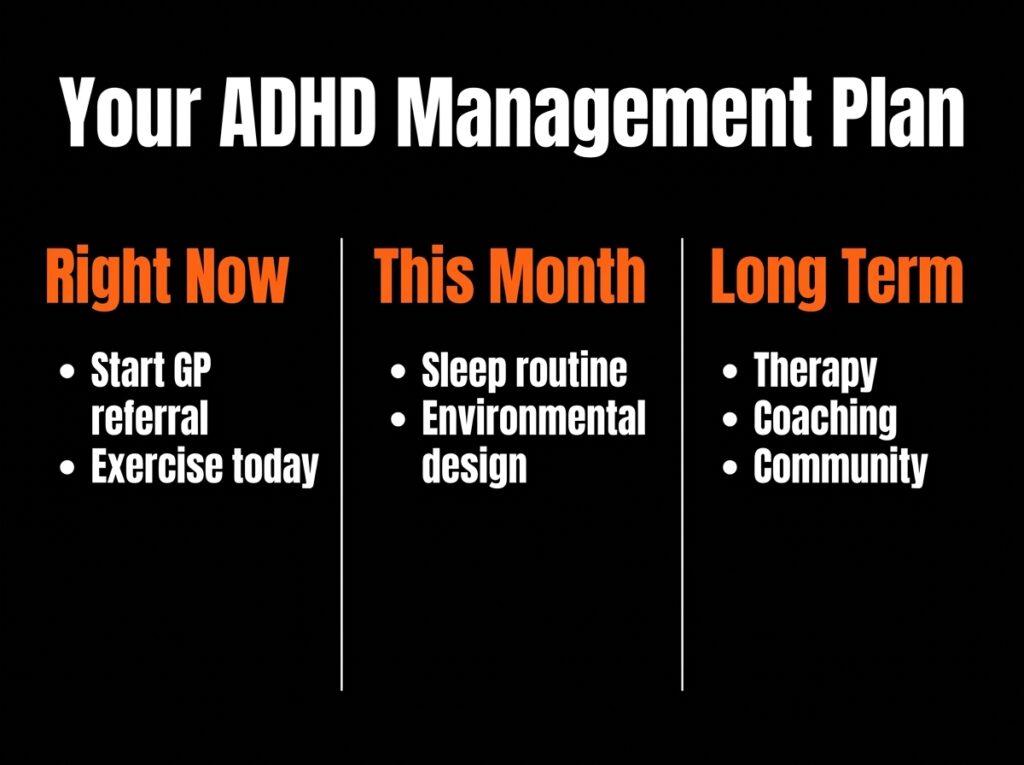
The most effective ADHD management for adults combines more than one approach. Not because any single route is insufficient, but because different elements address different parts of the problem. Medication may improve attention but won’t teach you the organisational systems you never developed. Coaching builds skills but works better when your brain chemistry is stabilised.
Here is a practical starting point:
- If you haven’t sought diagnosis: Request a referral from your GP and ask specifically about the right to choose pathway. Do not accept a blanket refusal.
- If you’re recently diagnosed and waiting for medication: Start with exercise, sleep, and one structural change to your environment. These are not placeholders. They are foundations.
- If medication isn’t working or isn’t right for you: Ask to try a different medication type or dose before concluding medication doesn’t work. Also explore ADHD-focused CBT. This is a legitimate primary route, not a fallback.
- If you feel like you’re managing alone: You probably are. That is not sustainable. Community, coaching, and peer support are not luxury additions to treatment. They are part of it.
Frequently Asked Questions
Can you treat ADHD without medication?
Yes, genuinely. Exercise, ADHD-focused CBT, coaching, sleep, and environmental structure all have evidence behind them. They are harder and slower than medication for many people, but they are real interventions, not workarounds. Many adults manage well without medication. Others do better with medication as part of a wider approach.
How do I get ADHD medication in the UK as an adult?
You need a specialist assessment first. Your GP cannot prescribe ADHD medication directly. You can be referred through the NHS (ask about the right to choose pathway to reduce wait times), or go through a private ADHD specialist. Once diagnosed, a shared care agreement with your GP can make ongoing prescribing more manageable.
What’s the difference between ADHD medication types?
Stimulants like methylphenidate and lisdexamfetamine work quickly and are the most commonly prescribed. Non-stimulants like atomoxetine work more gradually and suit people who experience anxiety or other issues with stimulants. Which suits you best is something to work through with a prescriber over time.
How do I find an ADHD specialist rather than a general GP?
Ask your GP for a referral to a psychiatrist or specialist neurodevelopmental service. If they won’t refer or the wait is unmanageable, you can self-refer to a private ADHD clinic. Look for psychiatrists with specific ADHD experience rather than general adult mental health.
I’ve tried medication and it didn’t work. Are there other options?
Yes. One medication not working doesn’t mean medication doesn’t work for you. The dosage, the type, and the timing all matter. Try a different option with your prescriber. Alongside that, ADHD-focused CBT, coaching, and lifestyle interventions are all evidence-backed routes that many adults find effective independently or in combination.
Your next step is simpler than it feels right now. Pick one thing from this article and do it this week. Book the GP appointment. Look up the right to choose pathway. Start the twenty-minute run. The system is slow and frustrating, but you don’t have to wait for it to get moving yourself.
