
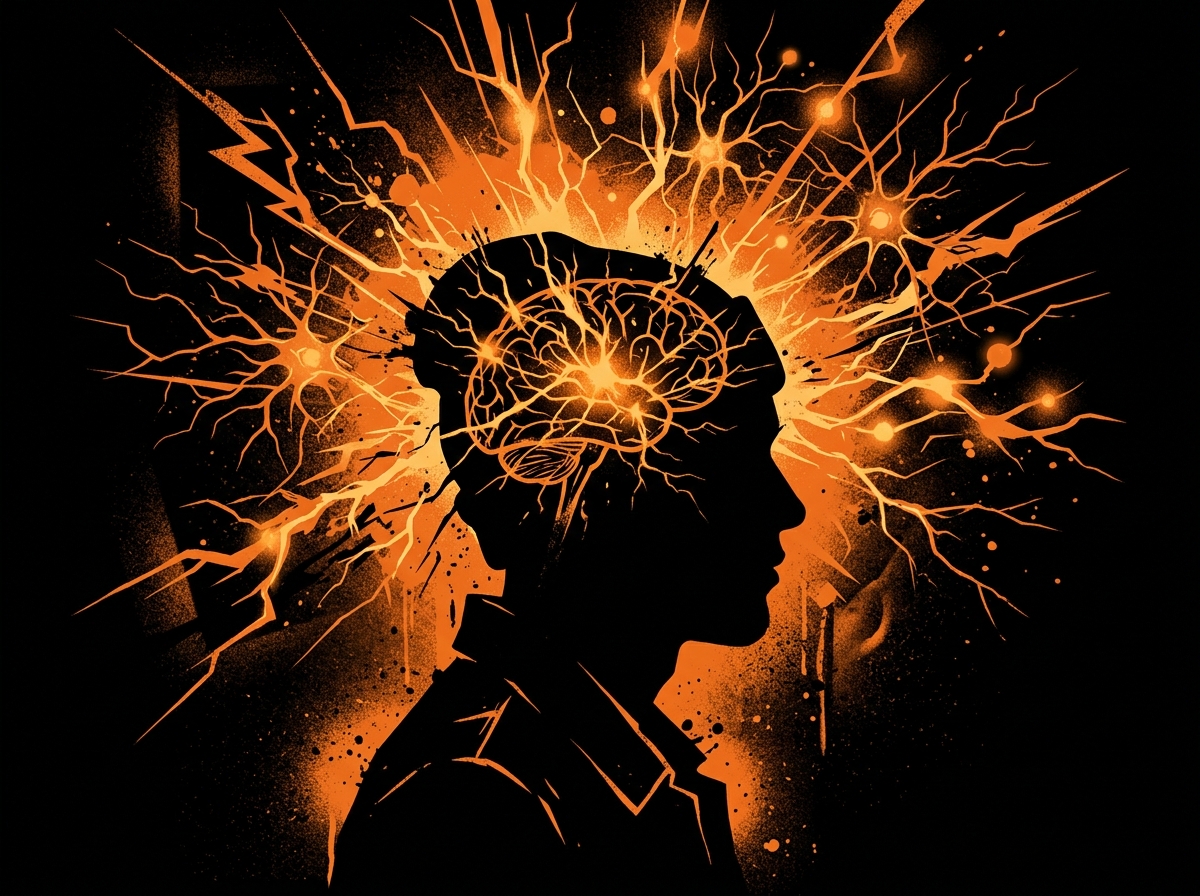
Let’s cut the crap. If you’ve got Attention-Deficit/Hyperactivity Disorder (ADHD), you know it’s not some cute little quirk. It’s like being a Ferrari with bicycle brakes, or having a supercomputer brain running on a dial-up connection. The world wants you to sit still, shut up, and color inside the lines, but your brain is busy building a theme park in the middle of a grocery store. At Rewired.org, we’re done apologizing for the chaos. ADHD isn’t a “disorder” you need to cure; it’s a wild-ass operating system that needs a better user manual, and maybe a few system upgrades
This isn’t about fitting in; it’s about owning your unique neuro-architecture. It’s about understanding why your brain works the way it does, and then hacking the system to make it work for you, not against you. Forget “normal.” We’re aiming for optimized chaos.
The Rewired Brain: A High-Octane, Non-Linear Experience
Your brain isn’t broken; it’s just built different. While neurotypical brains might follow a linear path, yours is a sprawling, interconnected network firing on all cylinders, often simultaneously. This can lead to incredible creativity, lightning-fast connections, and a capacity for hyperfocus that leaves others in the dust when you’re truly engaged. But it also means a constant battle against the mundane, a relentless internal monologue, and a tendency to chase every shiny new thought that flashes across your mental dashboard
Neuroscience confirms what you already feel: there are genuine differences in brain structure and function, particularly in areas governing executive functions – the mental tools for planning, organizing, and self-regulating. Neurotransmitters like dopamine and norepinephrine, crucial for motivation and reward, often operate on a different frequency, leading to a constant craving for stimulation and novelty
The Brain as a Rave: When Focus Becomes a Myth
Forget the idea of a single, unwavering beam of focus. For the ADHD brain, attention is less like a laser and more like a strobe light at a rave. Your thoughts are the DJs, playing 14 different tracks at once, and everyone is wearing neon. It’s loud, it’s messy, and it’s a total blast—until you realize you forgot to pay your electric bill or finish that critical report.

This isn’t a lack of attention; it’s an overabundance of it, directed at everything except the one thing you’re supposed to be doing. The “Focus Myth” is the idea that you can simply will yourself to concentrate on boring tasks. Your brain is literally wired to seek out novelty and stimulation, making sustained attention on the unstimulating a Herculean effort.

The Restless Itch: Hyperactivity and Impulsivity Unleashed
That restless energy? That’s not a flaw; it’s raw, untamed power. For kids, it’s bouncing off the walls. For adults, it’s the constant internal hum, the need to be doing something, the inability to truly relax. It’s your brain demanding more interesting data, more movement, more life. Trying to suppress it is like trying to hold back a tsunami with a teacup
Impulsivity? That’s your brain’s fast-twitch muscle for decision-making. Sometimes it leads to brilliant, spontaneous ideas. Other times, it leads to blurting out the wrong thing, making rash purchases, or diving headfirst into projects without a parachute. It’s the thrill and the terror of a brain that moves at warp speed, often bypassing the internal editor.
Hacking Your Operating System: A Rewired Survival Guide
Stop trying to be “normal.” Normal is overrated and boring. Instead, let’s hack your unique operating system. Here’s how to navigate the beautiful, chaotic mess and turn your ADHD into your superpower:
1.Embrace the External Brain: Your internal working memory might be a sieve, so offload everything. Use apps, whiteboards, voice notes, and physical reminders. If it’s not written down or set as an alarm, assume it won’t happen. This isn’t a crutch; it’s smart system design.
2.Gamify the Mundane: Your brain craves novelty and reward. Turn boring tasks into games. Set timers for sprints (e.g., 20 minutes of focused work, 5 minutes of frantic dancing). Reward yourself with micro-dopamine hits for completing small steps. Make it a challenge, not a chore.
3.Channel the Chaos: That restless energy? Don’t fight it. Channel it. Incorporate movement into your day: walking meetings, fidget toys, standing desks, or intense bursts of exercise. Your body needs to move to help your brain think. For impulsivity, build in a “pause button” – a mental trick to delay a response by 5 seconds before acting.
4.Find Your Tribe: Surround yourself with people who get it. Other neurodivergents, understanding friends, or an ADHD coach. You don’t need judgment; you need solidarity and strategies. They’ll help you see your strengths when you’re drowning in your perceived weaknesses.
5.Medication: A Tool, Not a Cure: If you choose medication, view it as a system upgrade, not a fix. It can help level the playing field, quiet the noise, and give you a moment to choose your response rather than react. But it won’t solve everything. It’s one tool in your arsenal, not the entire workshop
6.Embrace Your Strengths: Your ADHD brain is often highly creative, resilient, intuitive, and capable of incredible hyperfocus. Identify these superpowers and lean into them. Build a life and career that leverages your unique wiring, rather than constantly trying to force yourself into a neurotypical mold.

Conclusion: Your Brain, Your Rules
ADHD isn’t a bug; it’s a feature that needs custom configuration. Stop letting the world tell you how your brain should work. Embrace the beautiful, chaotic mess. Learn its rhythms, hack its systems, and channel its immense power. At Rewired.org, we believe in empowering you to write your own user manual, to navigate the non-linear landscape of your mind, and to truly thrive on your own terms. It’s time to rewired your perspective and unleash your authentic, powerful self.
References
[9] Barkley, R. A. (2015). Attention-deficit hyperactivity disorder: A handbook for diagnosis and treatment. Guilford Press.
[9] Hallowell, E. M., & Ratey, J. J. (2005). Delivered from Distraction: Getting the Most out of Life with Attention Deficit Disorder. Ballantine Books.
[9] Volkow, N. D., & Swanson, J. M. (2013). Clinical practice: Adult attention deficit–hyperactivity disorder. New England Journal of Medicine, 369(20), 1935-1944.
[9] American Psychiatric Association. (2022). Diagnostic and Statistical Manual of Mental Disorders, Fifth Edition, Text Revision (DSM-5-TR). American Psychiatric Publishing.
[9] Centers for Disease Control and Prevention. (2023). Treatment of ADHD. Retrieved from
